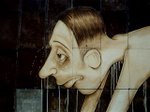

 While it is a well-documented fact that lemurs, especially Lemur catta, soak up the sun in semi-lotus position for an average of 9 hours per day, it's unclear whether or not the tongue action depicted here is legit. Maybe.
Showing posts with label lemurs. Show all posts
Showing posts with label lemurs. Show all posts
Monday, September 10, 2007
I Like Lemurs & Lemurs Like Me, vol. 6
While it is a well-documented fact that lemurs, especially Lemur catta, soak up the sun in semi-lotus position for an average of 9 hours per day, it's unclear whether or not the tongue action depicted here is legit. Maybe.

Saturday, May 12, 2007
I Like Lemurs & Lemurs Like Me, vol. 5
 "Bilbo the lemur has developed the habit of travelling to work on the metro with his handler. He gets on the train with Veronica Lindberg in the northern suburb of Alvik. But Bilbo, who is not really really a morning lemur, tends to stay wrapped inside a handkerchief under her jacket until they have travelled eight stops down the line to Central Station. By then he is ready to climb out of Lindberg's clothing and onto her head as they prepare for the last leg of the journey to Skansen's Aquarium... The tiny creature is one of only about 25 bamboo lemurs living in captivity in the world. Originally from Madagascar, bamboo lemurs -- who eat bamboo, hence their name -- are the smallest species of lemurs... Swedish media went crazy for the rare animal when news of his birth and rejection by his mother became known last week. Bilbo's picture has since been spread across the Internet, rivalling him in the Swedish media with Knut, the more famous polar bear recently born at Berlin's zoo."
-The Local, Sweden
Saturday, May 05, 2007
I Like Lemurs & Lemurs Like Me, vol. 4

"Hell-Ville, the main town on Nosy Be, was given its deliciously intriguing moniker in honor of a former French governor, Admiral de Hell, and the name couldn’t possibly be less appropriate... a place of volcanic lakes, hilly forests thick with possibility, shockingly lovely beaches and bizarre animals — both on land and below the sea... Lemurs are found only on Madagascar, and they thrive on Nosy Be and neighboring islands. At Lokobe, dark black male lemurs would stop in their foraging and face us with their massive, almost demonically orange eyes. The females had a more golden fur and were curious and unafraid. I understood how a superstitious mind could attribute them to the underworld."
—Ty Sawyer, MSNBC
Sunday, April 22, 2007
I Like Lemurs & Lemurs Like Me, vol. 3
 "The city began to stir yesterday, as if at some unheard signal, or perhaps at the many signals of ubiquitous birdsong, giggling children and flowering trees.
New Yorkers shed their winter garb — the Ugg boots, the turtlenecks, the long skirts, the overcoats, the parkas, the gloves, the hoodies and the fedoras — and exchanged them for flip-flops and dishabille...
As befits New York, spring is theater. In other places where troupes of the fit and the comely can also be found, like Miami, Los Angeles and Hawaii, the curtain rarely rises because it hardly ever falls. There, it is always butterfly weather. But in New York, the curtain has drama because the cocoon is never far away."—Anthony Ramirez, The New York Times, 4/22/07
Sunday, April 15, 2007
I Like Lemurs & Lemurs Like Me, vol. 2
 "I-a screama, You-a screama, we all-a screama for ice-a creama"
—Roberto, Down By Law
Friday, April 13, 2007
I Like Lemurs & Lemurs Like Me, vol. 1
 The word “lemur” derives from the Latin word, lemures—meaning specters or spirits of the dead—and was given to these prosimians on account of the animals’ ghostly faces and nocturnal habits.
The evolution of this Latin word has its own haunted history. According to ancient mythology, the city of Rome was founded by twin brothers Romulus and Remus, who had been suckled by a she-wolf as babies. Arguing over who should rule the new city, Romulus murdered Remus and named the city after himself. But the ghost of the fallen brother haunted Rome from then on. Every May, citizens of Rome would hold a festival—first called Remuria, but later corrupted to Lemuria—to expiate the ghost of Remus and other ancestral spirits. From this tradition grew the word lemures, one of several Latin words—including larva, the shell of a ghost—used to refer to various forms of phantom.
“Lemuria” also is the name of a mythological sunken super-continent, akin to Atlantis, once believed to lie in the Indian Ocean—coincidentally near the real lemur’s native home.
—Alex Hawes and Sue Zwicker, Smithsonian National Zoological Park
Subscribe to:
Posts (Atom)


